

Where Did Humans Evolve?
Gazing at the Changing Nature of the Garden of Eden


Imagine a group of ancient humans, crafting stone tools at the dawn of humankind. What did these creatures look like?
To find out, we can stare at the skulls in museums or glance at reconstructions made by paleo-artists. Here is one of the famous “Lucy”.
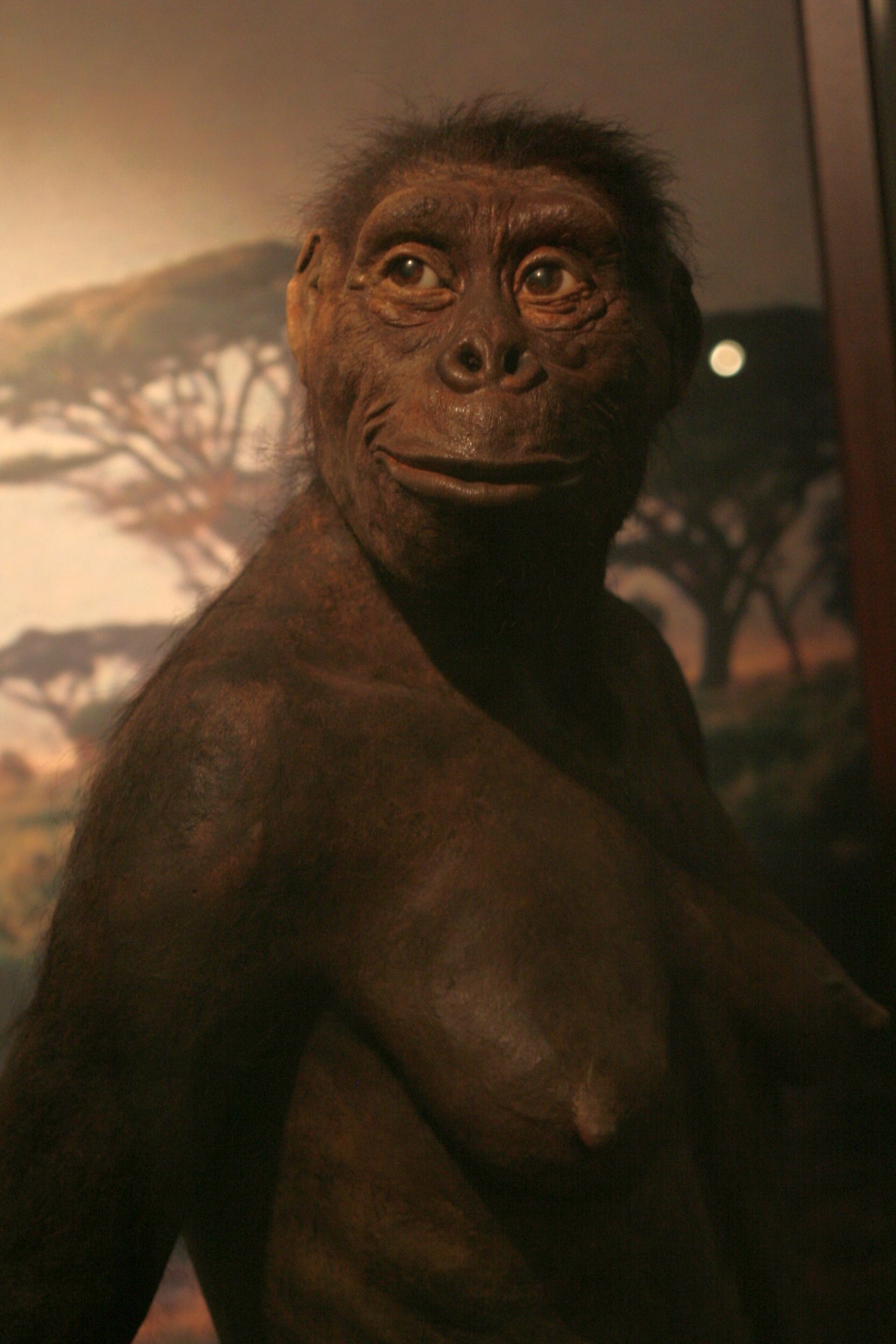
Not a bad start. But what if we move the lens and zoom into their surroundings? What was the scientific “Garden of Eden” like? Was it a lush forest, a dry savanna, or an icy cave? And what can the answer tell us about human nature more broadly?
Denise Su is a world-leading expert on these questions. A paleoecologist at Arizona State University’s Institute of Human Origins, she uses ever-more imaginative ways to get a glimpse into the nature and the weather that set the stage for the human story.
In this episode, we focus on two kinds of “changes” in the ecology that engulfed our ancestors: both the actual climate change that drummed the beat of human evolution, and the theoretical changes in the views of scientists thinking about these topics. Indeed, this episode revisits one of the hotly contested questions about the reasons why humans evolved: "the savanna hypothesis".
According to the savanna hypothesis, our naked, upright species evolved because African forests were shrinking and dry savannas emerged instead. Other apes stayed in the shrinking forests, but our brave ancestors took the shot, conquering the vast flatlands. As they did so, they started standing upright to better walk on the savanna and lost their fur, to sweat away the heat of the scorching sun.
I have told versions of this story on the show, and so have many senior guests. Yet even a brief Google search will give you plenty of critics telling that the savanna hypothesis is nothing but a convenient myth. Articles by Denise Su are often included in the evidence. So what’s going on? Listen to the episode to find out!
Listen (54 min): Spotify | Apple Podcast | YouTube audio | Other players
You can also listen to my previous episode on the topic, with Yale’s Jessica Thompson: “How Climate Crafted Humanity (Or Did It?)“
Human evolution timeline
Below is a rough estimate of the timeline for key periods of human evolution.
Last common ancestor with humans and chimpanzees: 6–7 million years ago
Ardipithecus ramidus (“Ardi”): 4.5–4.2 million years ago
Australopithecus anamnesis: 4.2–3.8 million years ago
Australopithecus afarensis (e.g. “Lucy”): 3.9–2.9 million years ago
Australopithecus deyiremeda: 3.5–3.3 million years ago
Earliest Homo: about 2.8 million years ago
Homo erectus/ergaster (e.g. “Turkana / Nariokotome Boy”): 1.9 million–112,000 years ago
Homo sapiens: 300,000 years ago till present (and going strong!)
Fact-checking
No factual errors have been detected so far. However, timing estimates and species names are still debated. Furthermore, the “hours” in the metaphorical clock can shift a fair amount based on the “midnight”: our last common ancestor with chimpanzees lived 6 to 7 million years ago, with some estimates pushing the date as far as 8 million. In the episode, our clock is tuned to 6 million years ago.
If you see an error, you can get in touch using the form below.
LINKS
Support: Patreon.com/OnHumans
Get in touch: https://forms.gle/h5wcmefuwvD6asos8
KEY WORDS
anthropology | archaeology | paleontology | human origins | human behavioural ecology | savanna hypothesis | paleolithic | paleoecology | hominid fossils | carbon isotopes C3/C4 | human evolution | human biology | climate change | human futures
Thanks for scrolling this far! Here are the links again:
Spotify | Apple Podcast | YouTube audio | Other players
As you are here, why not subscribe to more free-for-all content on the science of the human story? Every new subscriber makes me smile!
thanks mate please make your YouTube podcast public I can't access it saids private atm thanks
Thank you so much for your show! Highly appreciated
Regards from Sweden