

The Eastern Path to Modernity
The tech gap between China and the West is closing fast. But why did the land of paper and gunpowder ever fall behind? Fudan professor Debin Ma sketches the world-historical backdrop to China’s rise.

The interview is part of the Great Divergence series, produced by Warwick University’s CAGE Research Centre and On Humans. You can listen to episodes on Apple Podcasts, Spotify, or wherever you get your shows. Alternatively, you can keep reading for a summarised essay and a bibliography.
The rise of China has surprised many, and not only foreign observers. “I don’t think anyone saw this coming”, says Debin Ma, an economic historian currently at Fudan University in Shanghai.
Ma himself was born during the Cultural Revolution, well before the reforms began. “I had no idea that there was anything other than what Mao’s worldview had given to us”, he recalls.

The Chairman died in 1976, and the reform era kicked in three years later. Ma left China less than a decade later to study in the US. “Being one of the people who left China in the 80s, one of the things that really struck me was the huge backwardness of China at that time.”
This realisation made Ma turn to history. Why had the land of compass and gunpowder been left behind? “This was extremely relevant for understanding contemporary China”, he recalls. “It really got everybody’s imagination.”
This is sometimes called the “Needham Puzzle”, in reference to Joseph Needham, a leading chronicler of ancient China’s technological advancements. The Needham Puzzle lives on, but it has increasingly been absorbed into a broader question about the “Great Divergence” between Europe and Asia. Instead of focusing narrowly on technology and a story of China’s long-lost glory, historians of the Great Divergence often focus on living standards and GDP. On this front, Ma sees a flat line in imperial China — not a falling one.
The wedge between China and Europe may have already emerged by 1700, Ma thinks, but adds that “before the Industrial Revolution, any differences between economies were relatively minor”. The reverse was true in medieval times: Song China might have been richer than medieval Europe, but the difference was marginal. “The scale of divergence that we see today is coming from this enormous technology transformation during and after the Industrial Revolution,” Ma says.
So why did the Industrial Revolution happen in Britain, not in China?
One of the most popular answers comes from Oxford historian Robert Allen. Working with historical wage and price data, Allen noted that most of Europe looked similar to China around 1700, but not all: the British had unusually high wages. This was great for the workers, but business owners grumbled: Made in Britain was expensive. The solution? Invest in labour-saving machines.
My interview with Robert Allen is available here.
“It is important to note that Allen’s theory is not only about high wages,” Ma says. “He also stresses cheap coal”. Industrialisation made business sense in a land of expensive workers but cheap fossil fuels. It would not have made sense elsewhere, Allen argued, at least not before decades of efficiency gains brought about by British engineering.
“China provides a point of contrast,” Robert Allen wrote in his magnum opus, The British Industrial Revolution in Global Perspective. “A hemp-spinning machine was invented there in the thirteenth century, but it was never generally adopted and fell out of use”. It didn’t make business sense.
According to Allen’s own slogan, “innovation is 1% innovation and 99% perspiration”. The 1% might come from culture and ideas; the 99% comes from business incentives.
“I like Allen’s argument”, Ma says. “But that 1% is very, very important”.
So why was the inspiration greater in Europe than in China? Ma believes that this had to do with various factors, including culture in a broader sense. “I’ve been a big fan of Joel Mokyr’s work”, he says, referring to the 2025 Nobel laureate, whose work is often positioned as the main alternative to Allen’s. Instead of business incentives, Mokyr focuses on a scientific culture.
My interview with Joel Mokyr is available here.
“The artisan skills across Europe, they didn’t exist by accident,” Ma says.
Take silk. The Chinese had invented a simple silk reeling machine, which made its way to southern Europe. The French and Italians improved it, getting a technological lead as early as the 17th century.
“It’s not because of steam power”, Ma says. “It’s because of their use of the cogwheel and other complementary tools”. This is clearly not a story of British business incentives. This was a story about a broader European environment of technological skills.
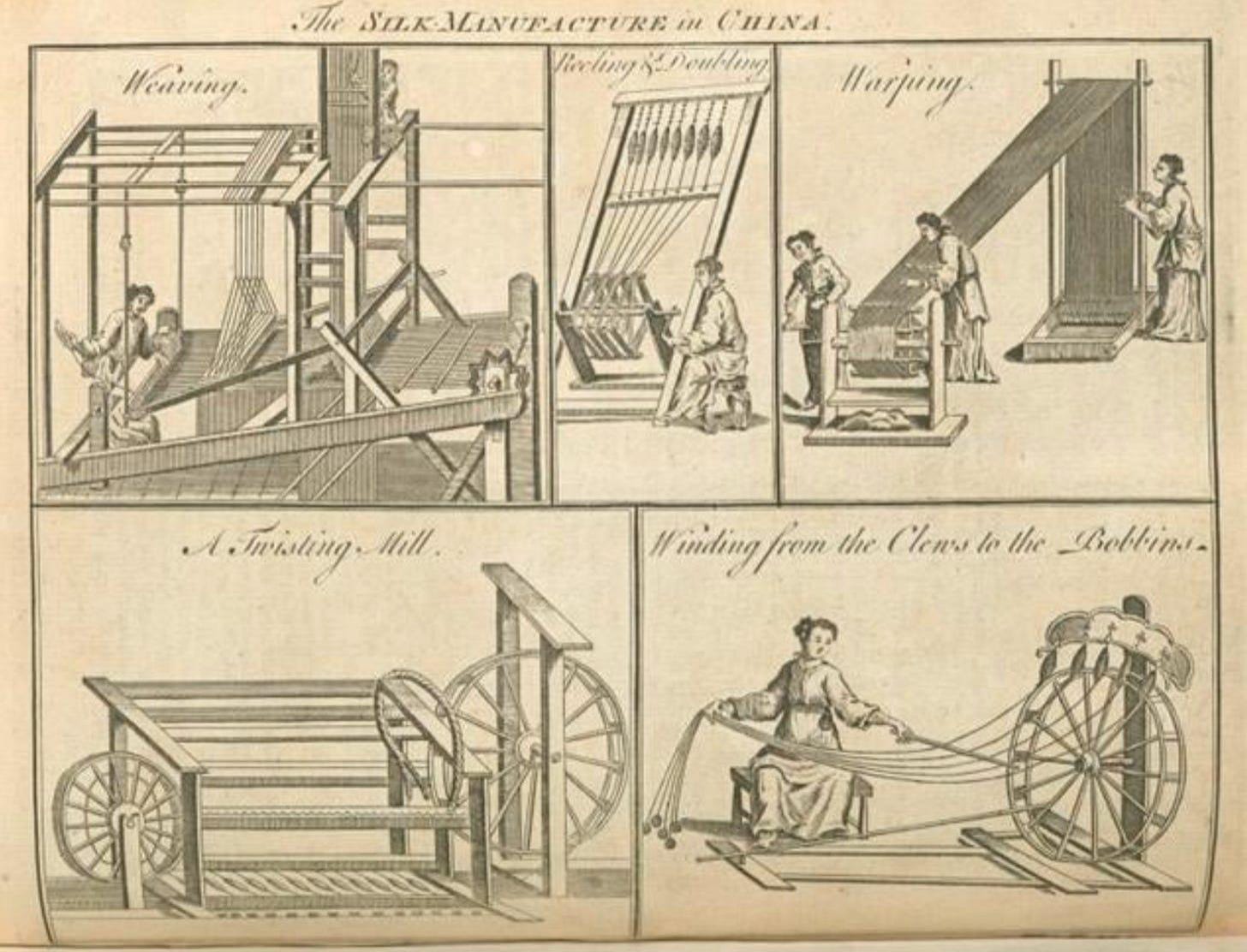
So did Britain’s lead over China lie in cheap coal, expensive workers, or a technological culture? Perhaps all. And perhaps there is a fourth element, this one coming from Ma’s own research: the Chinese state was weak.
Imperial China was an absolutist autocracy, a common stereotype says, with the emperor’s boot pressing hard against the face of private individuals. There might be truth to this image, but in terms of taxation, the Chinese emperor could at times be surprisingly laissez-faire.
“By the mid-19th century, when the British started the Opium War, the British per capita silver tax burden was about 100 times that of a Chinese person,” Ma says.
This is not a simple product of Britain being richer than China.
“In China, a peasant could work for about two days and pay off the entire year of taxes”, Ma calculates. “In Britain, that would take about 17 to 20 days”.
China wasn’t always a low-tax country. “Chinese taxation in percentage of GDP was probably the highest in the Song Dynasty (960—1279)”, Ma says. “It reached about 12 to 15%. Song was not just advanced in the technological frontier, but also in fiscal capacity.” The GDP lines may look flat, but on state capacity, the story of a falling China does have truth to it. The Qing dynasty (1644—1912) controlled a much greater territory, but its fiscal muscles were weaker. This was partially by design: by the late 1700s, Qing had eliminated most of its external threats. The focus was stability, and to maintain stability, the Qing kept taxes low.
In Europe, this wasn’t an option: chronic warfare ensured that states were either financially powerful or subsumed by those who were.
“The biggest financial shock to the state is always warfare”, Ma notes. To respond to this, European states did not just raise taxes. They raised loans.
The British and the Dutch had pioneered the use of government bonds. In practice, this meant borrowing money today against the tax revenue of tomorrow.
The Chinese logic ran in reverse.
When the legendary Macartney embassy from Britain reached the Qianlong emperor in 1793, the Qing ruler was confident that he needed nothing from the Europeans. His confidence was, at least partially, linked to his riches: the Qing government had over two years’ tax revenues saved up. And what did he do with all that silver? “He locked it up in a vault in Beijing, guarded by Manchu eunuchs,” Ma says with a grin.
For the Europeans, this made little sense. Why lock the money up? Why not use it — and then borrow more?
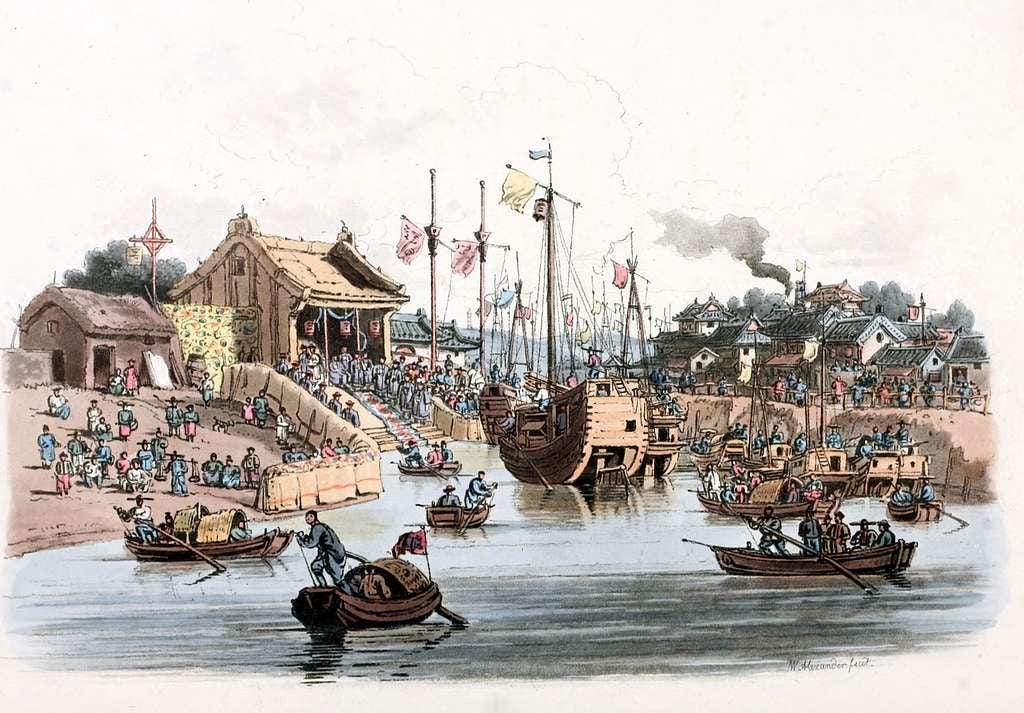
The European states ran big budgets. This gave them great military power, something China would witness during the Opium Wars. Not all of the money went to war, however. “In Britain, this allowed them to fund turnpikes and canals”, Ma says. “This made the country better connected even before the Industrial Revolution.”
What about Japan?
Japan was a fragmented state before the Meiji Restoration, and Ma sees this as crucial. In recent work with Jared Rubin and Weiwen Yin, Ma has argued that Japan’s lack of centralised policy allowed a kind of experimentation under fragmentation: entrepreneurial thinkers and leaders could test Western techniques at the margins, before these experiments were scaled up by the state.
Eventually, the radical ideas won the day. The Meiji Restoration of 1868 overthrew the Tokugawa order and launched Japan’s rapid programme of centralisation, reform, and Western learning.
“After the Meiji Restoration, there was a massive translation movement in Japan”, Ma explains. European texts were translated with fervour. “And with the translation movement, Japan learns about the theory of the modern state.” In 1870, Japan issued its first government bonds in London. In 1882, they established a central bank.
It wasn’t just government finance.
The Japanese became highly literate about Europe’s technical literature. This broke the old pattern, where industrial technologies spread only to British neighbours with existing cultural links.
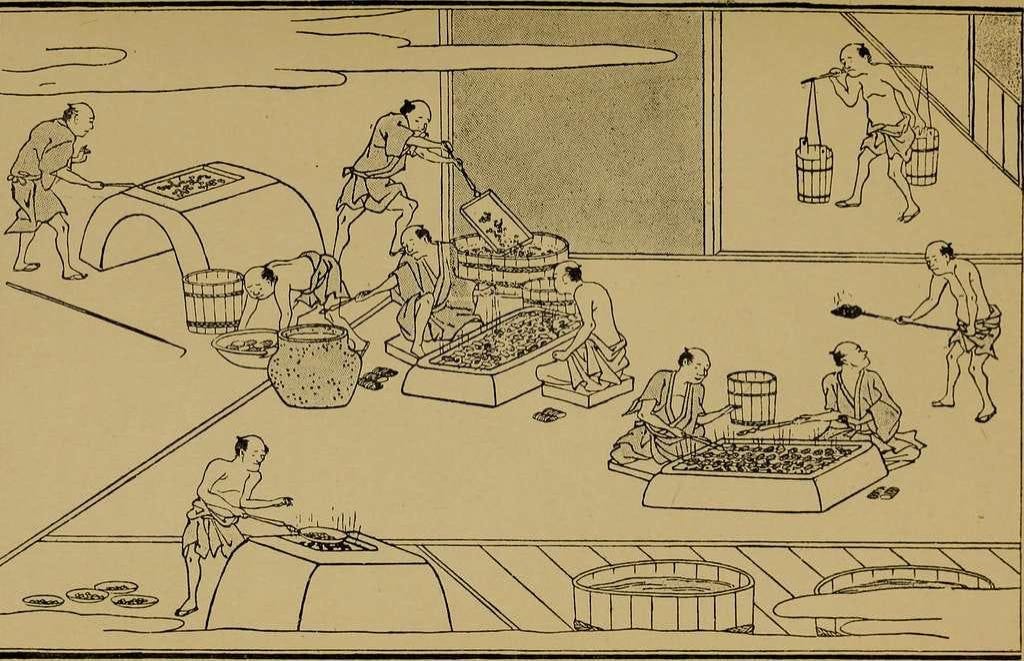
“The British Industrial Revolution diffused to areas where there’s much greater cultural similarity”, Ma says. Translating manuals was easy. “The machine in English became la machine in French, and so on”. Not so in Japan. “For every new word, you need a new equivalent”.
Yet the Japanese kept at it, soon absorbing technological knowledge from Europe.
Japan was the first, but not the last. North Korea aside, the whole East Asian region has had its own economic miracles. China’s per capita GDP is far from Western Europe or the US, but its technological advancements are in the daily news.
Why has East Asia had so many success stories? One answer lies in the old diffusion pattern, now running in the East instead of the West: Just as the British technologies flowed to France and the US, so did Japanese inventions flow easily to Korea, Taiwan, and Hong Kong. A second stage of this process occurred during China’s opening up in the 1980s.
“Taiwan, Hong Kong, Singapore — these were crucial to the successful opening in China,” Ma says. “These people can connect. They understand each other”.
Another potential reason lies in East Asia’s well-known achievements in education.
Take China. We cannot reliably measure the literacy rates of historical peoples, but we have surprisingly good proxies. One of these is called age-heaping. In illiterate societies, most people report their ages as a round number like 10, 15, or 30. The more numerate people become, the more evenly spread the reported ages.
“The thing about age heaping is that you can compare countries internationally”, Ma says. His own results are striking: even if China was poor towards the late 19th century, Chinese age-heaping was low, resembling Western Europe more than India or Turkey.
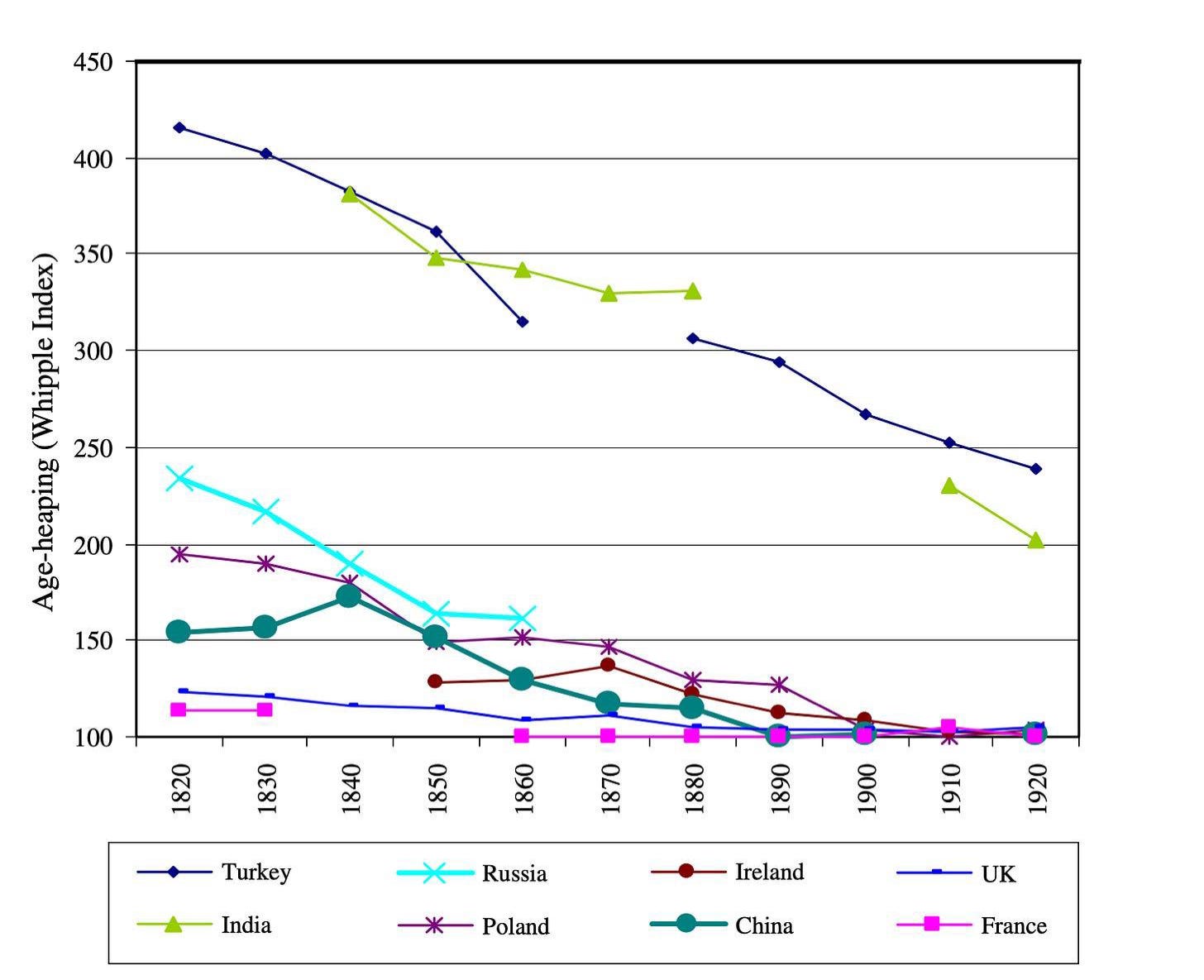
This finding echoes the argument made by generations of scholars, including lately Yasheng Huang in one of the most discussed China books of the 2020s: The Rise and Fall of the EAST.
China’s unique system of distributing political power by using examinations, open to all men, created a culture that respected literacy and education. Importantly, this culture wasn’t only an elite phenomenon: it permeated the whole society, creating a large pool of economically relevant human skills – of “human capital” – even before this was put to the service of economic development.
“On this point, I totally agree with Yasheng Huang,” Ma says. “Very few people actually pass the keju civil service exam, but many people still try to take the exam again and again. That builds a large mass human capital base.”
Ma thinks that this is visible in China today. “China is particularly good at a mass lower-level education. People have this respect for education,” Ma says. “This is part of what makes China such a manufacturing powerhouse.”
The contrast to India is striking. “The Indian elites are highly educated,” Ma says. But the situation with mass education is very different. Take female literacy: at the onset of China’s economic miracle, twice as many women could read in China as in India.1
Ma left China in the late 80s and has lived between Japan, the US, and the UK. In 2025, he moved back to his hometown of Shanghai.
“The transformation is remarkable”, he notes, and not just in terms of material living standards. The Chinese society has transformed, with no going back. But what lies ahead?
“Most people believed that you have to change politics before you change the economics, but Deng Xiaoping tried to keep these things separate,” Ma notes.
“Today, we still don’t know how that combination goes.”
You can listen to the full conversation on Apple Podcasts, Spotify, or wherever you get your shows.
This interview is part of the Great Divergence series produced by Warwick University’s CAGE Research Centre in collaboration with On Humans. The series explores explanations to why Western Europe and North America emerged as the most affluent and technologically advanced regions of the modern world. Guided by six expert guests, including a winner of the 2025 Nobel Prize in economics, we approach this topic with balance and breadth, exploring everything from colonialism and fossil fuels to science and technology.
1 | Why the West? Colonies, fossil fuels, and lessons from China (Kenneth Pomeranz)
2 | Why did so many inventions come from Europe? (Joel Mokyr)
3 | Why did the Industrial Revolution happen in Britain? (Robert Allen)
4 | A view from the East: China, Japan, and the other paths to prosperity (Debin Ma)
5 | The big picture: Measuring the origins of the modern world (Bishnupriya Gupta and Stephen Broadberry)
Bibliography
Key references
Ma, Debin, and Richard von Glahn, eds. The Cambridge Economic History of China. 2 vols. Cambridge: Cambridge University Press, 2022.
Baten, Joerg, Stephen Morgan, Debin Ma, and Qing Wang. “Evolution of Living Standards and Human Capital in China in the 18–20th Centuries: Evidence from Real Wages, Age-Heaping, and Anthropometrics.” Explorations in Economic History 47, no. 3 (2010): 347–359.
Ma, Debin, and Jared Rubin. “The Paradox of Power: Principal-Agent Problems and Administrative Capacity in Imperial China (and Other Absolutist Regimes).” Journal of Comparative Economics 47, no. 2 (2019): 277–294.
Ma, Debin, Jared Rubin, and Weiwen Yin. “Ideology and Economic Change: The Contrasting Paths to the Modern Economy in Late 19th Century China and Japan.” Journal of Government and Economics 15 (2024): 100122.
Works mentioned in the episode
Allen, Robert C. The British Industrial Revolution in Global Perspective. Cambridge: Cambridge University Press, 2009
Broadberry, Stephen, Hanhui Guan, and David Daokui Li. “China, Europe, and the Great Divergence: A Study in Historical National Accounting, 980–1850.” The Journal of Economic History 78, no. 4 (2018): 955–1000.
Huang, Yasheng. The Rise and Fall of the EAST: How Exams, Autocracy, Stability, and Technology Brought China Success, and Why They Might Lead to Its Decline. New Haven, CT: Yale University Press, 2023.
Kuo, Kaiser Y. “The Great Reckoning: What the West Should Learn from China.” Sinica, 18 Oct. 2025. Originally published in The Ideas Letter.
Lin, Justin Yifu. “The Needham Puzzle: Why the Industrial Revolution Did Not Originate in China.” Economic Development and Cultural Change 43, no. 2 (1995): 269–292.
Needham, Joseph. Science and Civilisation in China. Cambridge: Cambridge University Press, 1954.
Further reading
Allen, Robert C., Jean-Pascal Bassino, Debin Ma, Christine Moll-Murata, and Jan Luiten van Zanden. “Wages, Prices, and Living Standards in China, 1738–1925: In Comparison with Europe, Japan, and India.” The Economic History Review 64, no. S1 (2011): 8–38.
Brandt, Loren, Debin Ma, and Thomas G. Rawski. “From Divergence to Convergence: Reevaluating the History Behind China’s Economic Boom.” Journal of Economic Literature 52, no. 1 (2014): 45–123.
Broadberry, Stephen, Hanhui Guan, and David Daokui Li. “China, Europe, and the Great Divergence: A Restatement.” The Journal of Economic History 81, no. 3 (2021): 958–974.
Elvin, Mark. “The High-Level Equilibrium Trap: The Causes of the Decline of Invention in the Traditional Chinese Textile Industries.” In W. E. Willmott, ed., Economic Organization in Chinese Society, 137–172. Stanford, CA: Stanford University Press, 1972.
Sivin, Nathan. “Why the Scientific Revolution Did Not Take Place in China — or Didn’t It?” Chinese Science 5 (1982): 45–66.
Solar, Peter M. “China’s GDP: Some Corrections and the Way Forward.” The Journal of Economic History 81, no. 3 (2021): 926–957.
Rosenthal, Jean-Laurent, and R. Bin Wong. Before and Beyond Divergence: The Politics of Economic Change in China and Europe. Cambridge, MA: Harvard University Press, 2011.
The World Bank figures for 1981/82 are 25.68% (India) and 51.14% (China).